



Miracle of the SeaLip Health Balm
Made by a Beverly Hills dermatologist · US Patent 10,772,825
Shop Lip Health BalmShop
Small lilac flowers resting between a woman's lips, a dark leaf across her shoulder.

Made by a Beverly Hills dermatologist

Chapped lips that come back no matter how much balm you use.

Your lips make no oil of their own, so balm never lasts. Dr. Eric Lewis, a Beverly Hills dermatologist, made one you put on once a day.

Rated 5.0 by more than 1,000 of Dr. Lewis's patients5.0 from 1,000+ of Dr. Lewis's patients

30-day money back on your first jarFree shipping

Subscribe and save 15%, or change strength

  • Money-back guaranteeon your first jar
  • Free shippingon orders over $100
  • Since 1981Dermatologist Eric Lewis, MD
  • Patent 10,772,825Natural Marine Extract™
  • 283patients completed the four-month study
  • Featured in Forbes2015
  • 14marine species in one extract
  • Once a daythen every other day
  • Nevertested on animals
  • 25 yearsof marine research
A woman's lips in profile, lit by warm low light against a dark background.

Your lips can't make a drop of their own oil.

The rest of your face oils itself all day. Your lips depend on whatever you put on them, and they lose it fast.

That oil is called sebum. It's a blend of triglycerides, fatty acids, wax esters, squalene and cholesterol, and it keeps skin supple, sealed and lubricated.15

“Sebum is the ultimate anti-aging substance.”
Eric Lewis, MD
Compare your lips with your faceOil glands, squalene, water loss, moisture, outer layer

Tap each number

No oil glands in the red of your lips.

Your forehead has 400 to 900 in every square centimeter.2 Your lips have none at all, and no sweat glands.3 That's why they're usually the first place your body shows dryness.

ForeheadOne square centimeter, 400 to 900 oil glands
0
LipsOne square centimeter, none

Sebum carries squalene. Your lips go without it.

About 12 percent of your skin's oil is squalene.15 It's an antioxidant that helps protect the skin's surface from the damage sunlight sets off.16 Your lips get none, which is one more reason to wear a lip product with SPF outdoors.

FaceThe skin's own oil, by what it's made of

Almost three times the water loss of your cheek.

Measured side by side, lips lost water nearly three times as fast as the skin on the cheek.1

CheekWater leaving the skin
LipsAbout three times as much

About a third of the moisture.

The cells on the surface of your lips never fully mature into a protective layer, so they hold about a third as much water as your cheek.1

1×
CheekSurface moisture
⅓
LipsAbout a third as much

A thinner outer layer than your face.

With fewer layers of cells on top, capillaries sit close to the surface. It's why lips look red, and why they dry out first.3

Outer layerCapillaries
FaceMany layers of cells, capillaries deep
Outer layerCapillaries
LipsA few layers, capillaries near the surface

A balm can cover all of this for a few hours. It can't change it.

Illustrations are schematic. Sources 1 to 3 and 15 to 16 at the foot of the page.

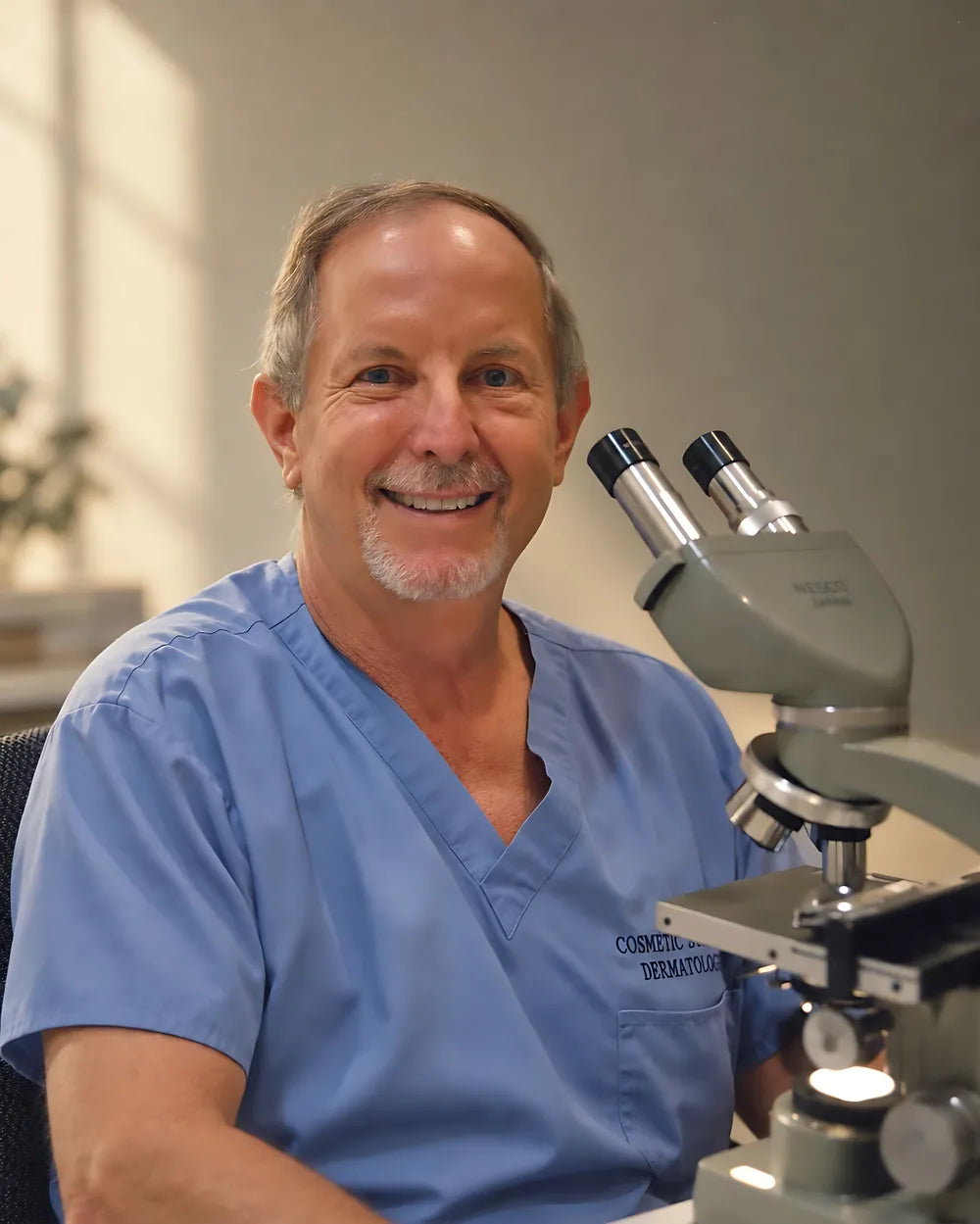
Dr. Eric Lewis, MD, at a microscope in his practice.
In his Beverly Hills practice

The doctor who made it

Eric Lewis, MD.

Dermatologist in Beverly Hills since 1981, and director of the Beverly Hills Dermatology and Wound Care Research Center.

Since 1981
In practice in Beverly Hills
UCLA
Medical school, dermatology residency, later clinical instructor
Several patents
Including Natural Marine Extract™ and the Miracle Bandage
San Quintín
Donates surgical work on the Baja coast where the extract is grown

Four questions for Dr. Lewis

Lip health is extremely important, and it's usually under-treated. My patients had something for every part of their face except their lips.”
I spent twenty-five years studying marine compounds. Of the 3,400 we looked at, 88 made the cut, and fourteen species went into this extract.”
A quarter of a pea, pressed in for ten seconds. Once a day for the first month, then every other day. Piling on more won't speed it up.”
Anyone with a known seafood allergy. And if a crack or sore on your lip won't heal, don't treat it at home. Come and see a dermatologist.”

Eric Lewis, MD

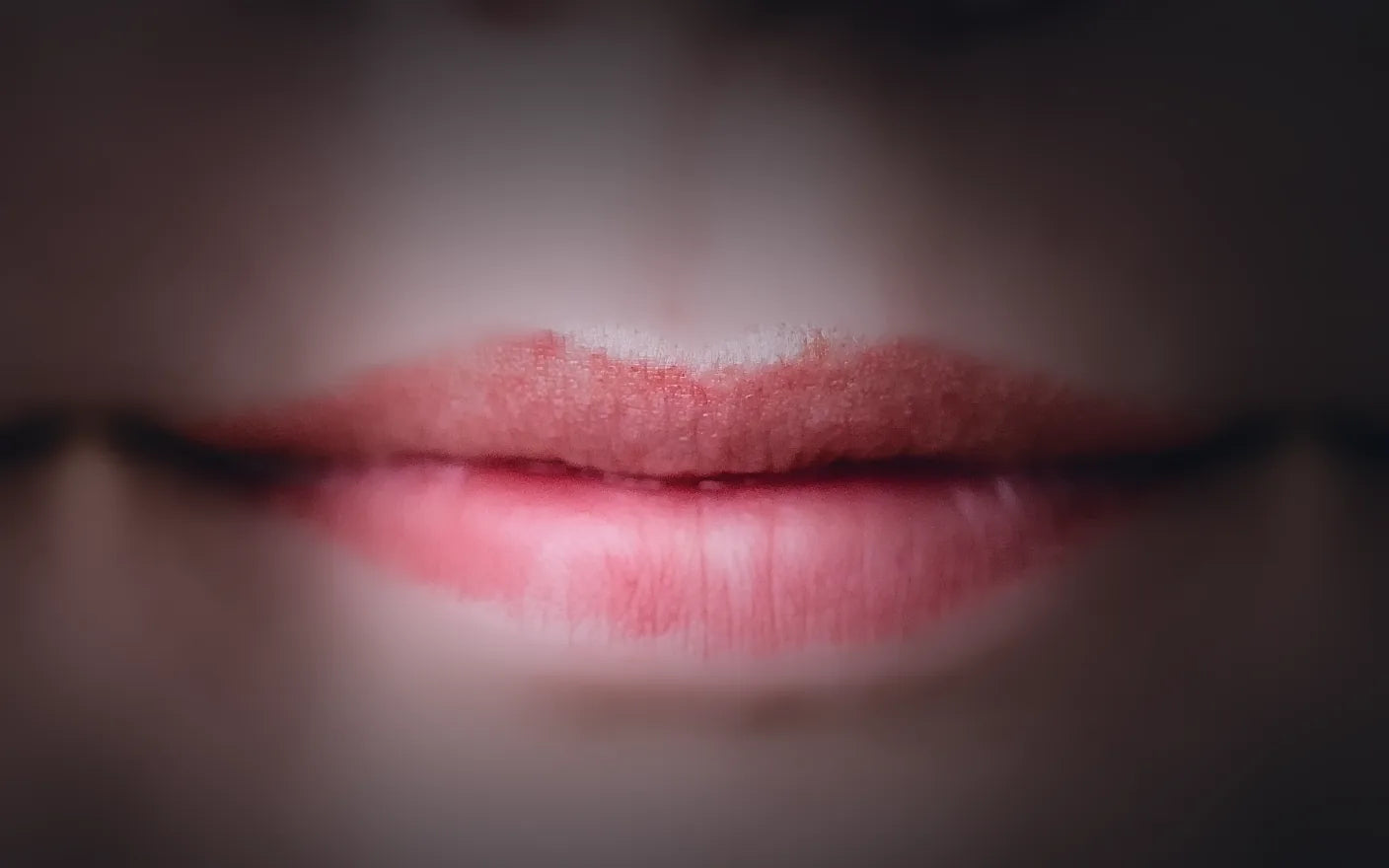
A close-up of a woman's mouth, with fine dry lines across the upper lip.
1 2 3 4

What's happening on your lips right now.

Dryness is the part you can feel. Keep scrolling, or tap a number, to see what's behind it.

1

The edge softens

Sun and time blur the line around your lips. It's why lipstick starts to bleed.

2

Lines open into cracks

As the surface dries, fine lines open into tiny splits, which dermatologists call micro-fissures. Each one is a break in the barrier that lets irritation in. The irritation becomes inflammation, and over time inflammation wears down the tissue underneath.

3

The lower lip takes the sun

It sits further out and tilts toward the sky, so it catches more sun. Dryness and cracking that won't go away here is often caused by years of sun damage. A rough or scaly patch that won't heal is worth showing a dermatologist.

4

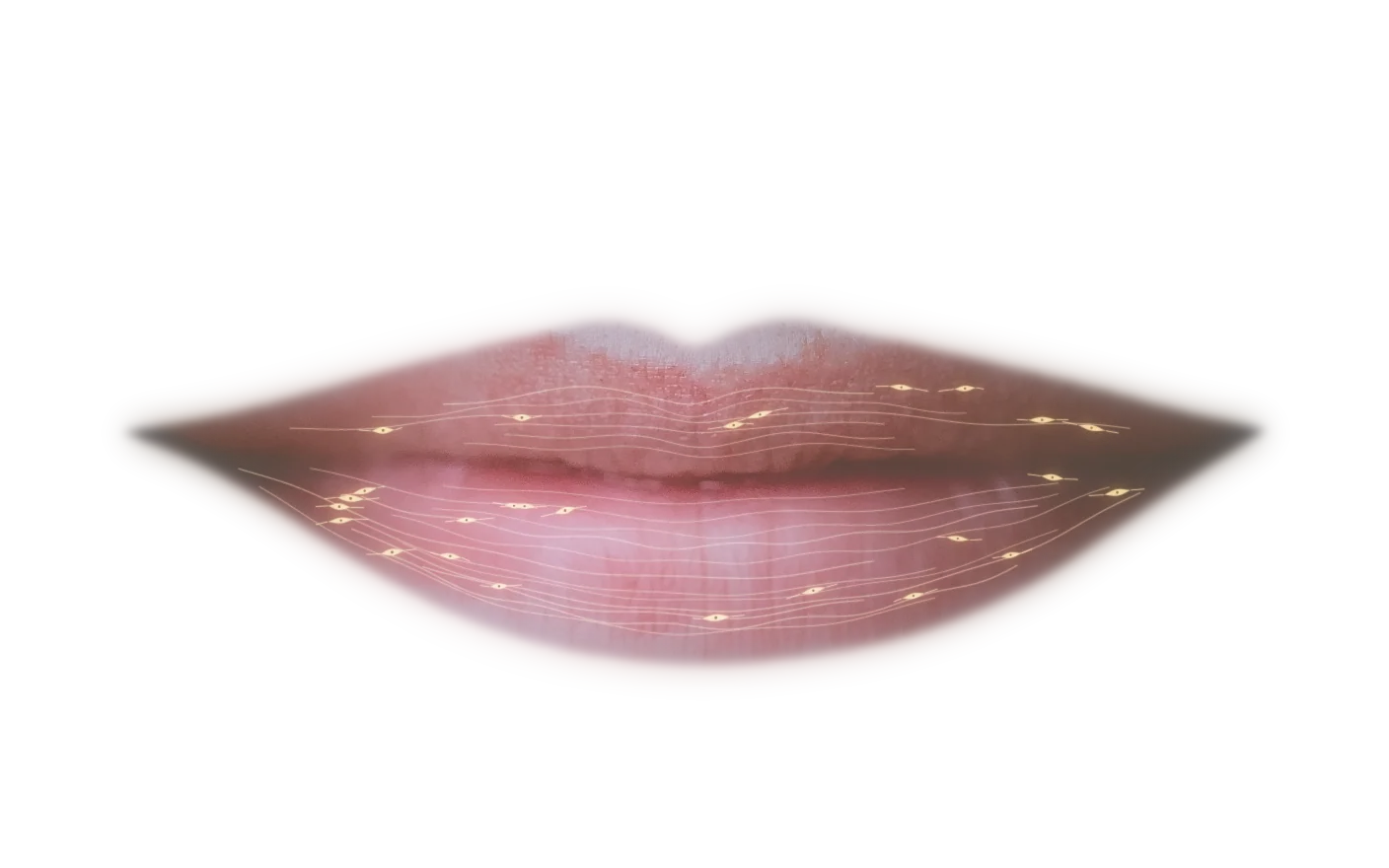
Fullness comes from underneath

Fibroblasts below the surface make the collagen, elastin and hyaluronic acid that keep lips full. Years of sun inflame the tissue, break down collagen and elastin, and can kill off the fibroblasts that make them.

Dr. Lewis on lip health

Dry lips that keep coming back are often sun damaged.

The lower lip is one of the most dangerous places on the body for sun damage and skin cancer. Dermatologists call the damage actinic cheilitis. It builds over years, in stages, and at every stage it keeps lips from healing.

Most people don't realize the importance of lip health.”
Eric Lewis, MDDermatologist in Beverly Hills since 1981

Tap a stage, or let it play

Stage 1 of 4Dry and cracking

This is the stage you can feel. The dry surface opens into micro-fissures, and germs get in through them: the viruses behind cold sores and warts (herpes simplex and HPV), the bacteria behind impetigo (staph and strep), and Candida albicans, the yeast that splits the corners of the mouth. Dermatologists call those split corners perlèche.

Lip tissue is loose, so lips swell before the rest of the face does. Dr. Lewis calls the lips and eyelids the sponges of the face.

Stage 2 of 4Divots

Small dents form in the lower lip, usually where it catches the most sun. For many people they're the first sign they can see.

Stage 3 of 4Precancers

Divots often turn into actinic keratoses, which are rough, scaly precancers. Under the microscope, sun-damaged lips usually show Bowenoid changes, which keep new ones forming.

Stage 4 of 4Skin cancer

Actinic keratoses on the lower lip can turn into squamous cell carcinoma. The lip is one of the few places where skin cancer tends to spread into the body. In a large review, lip cancers spread about 14 percent of the time, against about 5 percent on other sun-exposed skin.17

How it's usually treated

The usual treatments

Freeze one, and another comes up.

Most lip precancers are frozen off with liquid nitrogen. But sun-damaged lips keep making new ones, so each time one is frozen, another forms. Dr. Lewis calls it whack-a-mole.

Whack-a-moleA precancerFrozen off

Tap a treatment to open it

Liquid nitrogen

Freezes off one precancer at a time while new ones keep forming. Patients call it getting their lips burned, and it hurts.

5-fluorouracil creams

The most prescribed creams for precancers. Because of the mutations they can cause, Dr. Lewis feels this whole group of creams should never be used.

Imiquimod

A cream that stirs up the immune system. It can be used, but it sets off a tremendous inflammatory reaction.

Radiation

Often chosen for large lip cancers, because surgery there is difficult and can scar. X-rays damage the DNA of cancer cells and normal cells alike. They kill the cancer, but they leave behind basophilic degeneration, which pushes normal cells toward new skin cancers, and they thin and age the skin by destroying collagen and elastin.

The difference

In Dr. Lewis's experience, Natural Marine Extract™ does better than liquid nitrogen on sun-damaged lips.

Liquid nitrogenOne spot at a time. New ones keep coming.Natural Marine Extract™Helps stimulate the fibroblasts sun destroys.
Drag to compare

The extract helps stimulate the fibroblasts that sun destroys, the cells that keep lips full. Used before, during and after radiation, it helps minimize the damage and start the repair process. And in research, species in the extract have been shown to stimulate the immune system to kill cancer cells18–20 and to help rejuvenate skin.9–14

Lips are some of the most vulnerable skin you have. Dr. Lewis recommends Lip Health Balm for:

  • Existing lip divots
  • Dry, cracking lips
  • Before and after radiation
  • Lip sores
Almost had to be cut out but now it's going away.”
James Caplan, MDPhysician, and a patient of Dr. LewisRead his review

Lip balms coat the surface and lip sunscreens block the sun. Lip Health Balm is made for the skin underneath.

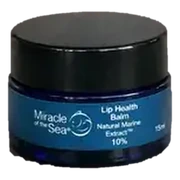
A jar of Lip Health Balm

Lip Health Balm, 2% strengthFrom $150

Shop Lip Health Balm

30-day guarantee on your first jar. Free shipping over $100.

See what's in it

What's in the jar.

What each ingredient does, and where it does it. Tap one to see.

Natural Marine Extract™01Works underneath20 to 35×more fibroblasts on the treated side of our biopsy

Fourteen marine species in one patented extract that helps stimulate fibroblasts, the cells that make collagen, elastin and hyaluronic acid. It's the same extract as our face gel, set in coconut oil because lips have no oil of their own.

See the biopsy
Organic coconut oil02Seals the surface34people with dry skin in a double-blind trial, where virgin coconut oil hydrated as well as mineral oil, with a trend toward doing better5

Coconut oil is mostly triglycerides, one of the main fats in your skin's own oil.15 Your lips can't make that oil, so the balm brings its own.

In lab tests on human skin cells, it also raised filaggrin and involucrin, two proteins the skin barrier is built from, by about 40 and 47 percent.6

Aloe vera gel03Adds water to the outer layerTwo weeksof use raised the water content of skin's outer layer at every concentration of aloe tested7

At the higher concentrations, a single application was enough to make a measurable difference.7

Vegetable glycerin04Holds water at the surfaceDraws water inand holds it at the surface, the way your skin's own glycerin does

A review in the British Journal of Dermatology found glycerin improves hydration and barrier function and helps protect skin from irritation.8

Staying power05Keeps the balm in placeStays putHydrogenated polyisobutene, ethylene copolymer and butylene copolymer

Three ingredients that help the balm cling to your lips rather than wiping straight off.

Illustration of a lip in cross-section, not to scale. Scented with Ocean Breeze, our blend of 100% organic lavender, grapefruit and vetiver essential oils. Research shown is on each ingredient on its own, mostly on skin rather than lips. Never tested on animals.

Scented with Ocean Breeze, our blend of 100% organic lavender, grapefruit and vetiver essential oils. Research shown is on each ingredient on its own, mostly on skin rather than lips. Never tested on animals.

A sea urchin on a rock, seen through rippling, sunlit water.

The fourteen species in Natural Marine Extract™.

It took MBET eleven years to narrow 3,400 ocean compounds down to 88. These are the species the extract comes from. Tap a family to read the research.

Lab, animal and human research on individual species or close relatives, not on Lip Health Balm. Sources 9 to 14 and 18 to 20 at the foot of the page.

Featured in Forbes, 2015

“…the only active ingredient that we know of that stimulates [fibroblasts] to reproduce.”

Forbes, on Natural Marine Extract™

See it under the microscope

Under the microscope

Untreated and treated, side by side.

A biopsy is a tiny sample of skin, sliced thin and studied under a microscope. These come from one patient, age 60, after 46 applications. One hand had the base lotion alone. The other had the same lotion with 2% Natural Marine Extract™.

What the treated side showed

  • 20 to 35×more fibroblasts, the cells that make collagen, elastin and hyaluronic acid
  • 10 to 15×more capillaries feeding them
  • 3 to 5×thicker epidermal layer, the protective surface

One patient's skin, not lips.

See the biopsy, side by sideZoom in through all six measurements, then see the original slides

Both samples sit side by side under one microscope. First you see them from above. After that you're looking at a thin slice, seen from the side, with the skin's surface toward the top.

  1. 1Left had the base lotion alone. Right had the same lotion with 2% Natural Marine Extract™.
  2. 2Tap Zoom in, or any of the six measurements, to look closer.
  3. 3The original slides are further down, under the drawing.

Illustration drawn from the biopsy below. Skin, not lips.

1 of 6The whole sample, from above

33%contraction

Same size punch on each hand. The treated skin drew in tighter.

The punchUntreated sampleTreated sampleSee it on the original slides

2 of 6Cut and seen from the side

3 to 4×thicker dermal layer

Where collagen, elastin and hyaluronic acid are made.

Depth of the dermal layerEpidermal layerDermal layer

3 of 6Closer, at the surface

3 to 5×thicker epidermal layer

The protective outer layer of skin.

Thickness of the epidermal layerOne cell

4 of 6Inside the dermal layer

2 to 6×more collagen, elastin and hyaluronic acid

Strength, spring and fullness.

CollagenElastinHyaluronic acid

5 of 6Closer still

10 to 15×more capillaries

They feed the cells that make collagen, elastin and hyaluronic acid.

A capillary, cut acrossRed blood cells

6 of 6The cells themselves

20 to 35×more fibroblasts

The cells that make collagen, elastin and hyaluronic acid.

One fibroblast

Illustration drawn from the biopsy below. Skin, not lips.

The six measurements

The biopsy it's drawn from.

Left, the base lotion alone. Right, the same lotion with 2% Natural Marine Extract™.

A note on lips

This biopsy is skin, not lips. We show it because lips are built from the same fibroblasts, collagen, elastin and hyaluronic acid it measures.

How to read the biopsy

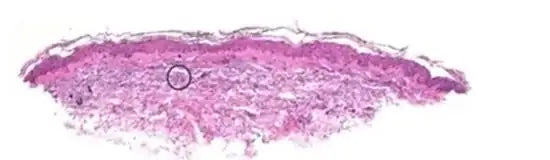
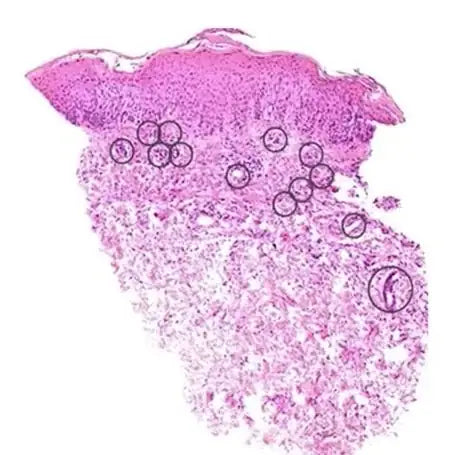
Rings mark capillaries. Small blue dots mark fibroblasts. Both biopsies were taken with the same size punch, one from each hand, and are shown at the same scale. The marker at the side measures the thickness of the tissue. The marker above measures its width. The treated skin was tighter, so its sample drew in more: a 33% contraction.

Untreated
ContractionDepthHistology section of untreated control skin, a thin band of tissue at the base of the frame.
Base lotion only
Treated · 2% NME
ContractionDepthHistology section of skin treated with 2% Natural Marine Extract, filling most of the frame.
Base lotion with 2% Natural Marine Extract™

The frame did not change. The tissue did.

A woman's face tilted up toward warm light, her eyes closed.

From the people who use it.

Before it was sold online, Dr. Lewis sold it across the counter at his practice, to patients he would see again at their next visit.

A customer · Lip Health Balm
“This balm has given me so much plumping and moisture.”

“I tend to have very dry skin and that includes my lips... I really love it.”

Dearbhla K.Verified customer

A customer · Lip sun damage repairing
“All that sun damage is repairing.”

“I was having to have my lips burned (for pre-cancers) and it hurt so much. Now I don't have to have my lips burned at all. All that sun damage is repairing.”

LisaVerified customer · Natural Marine Extract™ topical

A physician · Lip pre-cancer and divot
“I had big divots on my lip and they are getting better.”

“I've been using Miracle of the Sea for a few months now. It has dramatically improved a lot of my pre-cancers on my face, my lip, my nose, my scalp. Almost had to be cut out but now it's going away. I had big divots on my lip and they are getting better.”

James Caplan, MDPhysician, and a patient of Dr. Lewis

A dentist · Lip cancer treatments greatly reduced
“What really caught my attention were the lesions on my lower lip.”

“I had a lot of skin damage on my hands, forearms, face, neck, lip and ears. What really caught my attention though were the lesions on my lower lip. It was explained to me that the squamous cells on the lip are the only ones on the surface of the body that can go directly into the bloodstream and kill you.”

Mike Clinite, DDSDentist

5.0
Average rating
1,000+
Patients gave it five stars
<1%
Send it back
85%+
Buy it again

Individual results vary. Quotes are from customer videos and two doctors' own accounts. Lisa used the Natural Marine Extract™ topical on her lips rather than the balm. Figures cover the Miracle of the Sea line. The five-star ratings are from Dr. Lewis's patients. Reorder and return rates come from our sales records over many years, for patients and online buyers.

The price

Why it costs more than a drugstore balm.

You pay more for the jar, and it lasts four to six months.

A typical lip balmvsLip Health Balm
Wax and oils, often with menthol or camphorWhat's in itA patented extract of 14 marine species
Coats the surfaceWhat it doesSeals moisture in and helps stimulate fibroblasts underneath
All dayHow oftenOnce a day, then every other day
A full coatHow muchA quarter of a pea
A consumer brandMade byA dermatologist, in practice since 1981

On Dr. Lewis's routine: a quarter of a pea, every day for the first month, then every other day.

“It was the most expensive skin care product I have ever bought, and I quickly realized what a bargain it was.”

Barbara R., 65, Natural Marine Extract™ oil on face and chest

4 to 6 monthsfrom one 15mL jar on Dr. Lewis's routine. About a dollar a day.

Start with 2%.

The strength every new customer starts with. Get the balm on its own, or add the 2% gel for the rest of your face.

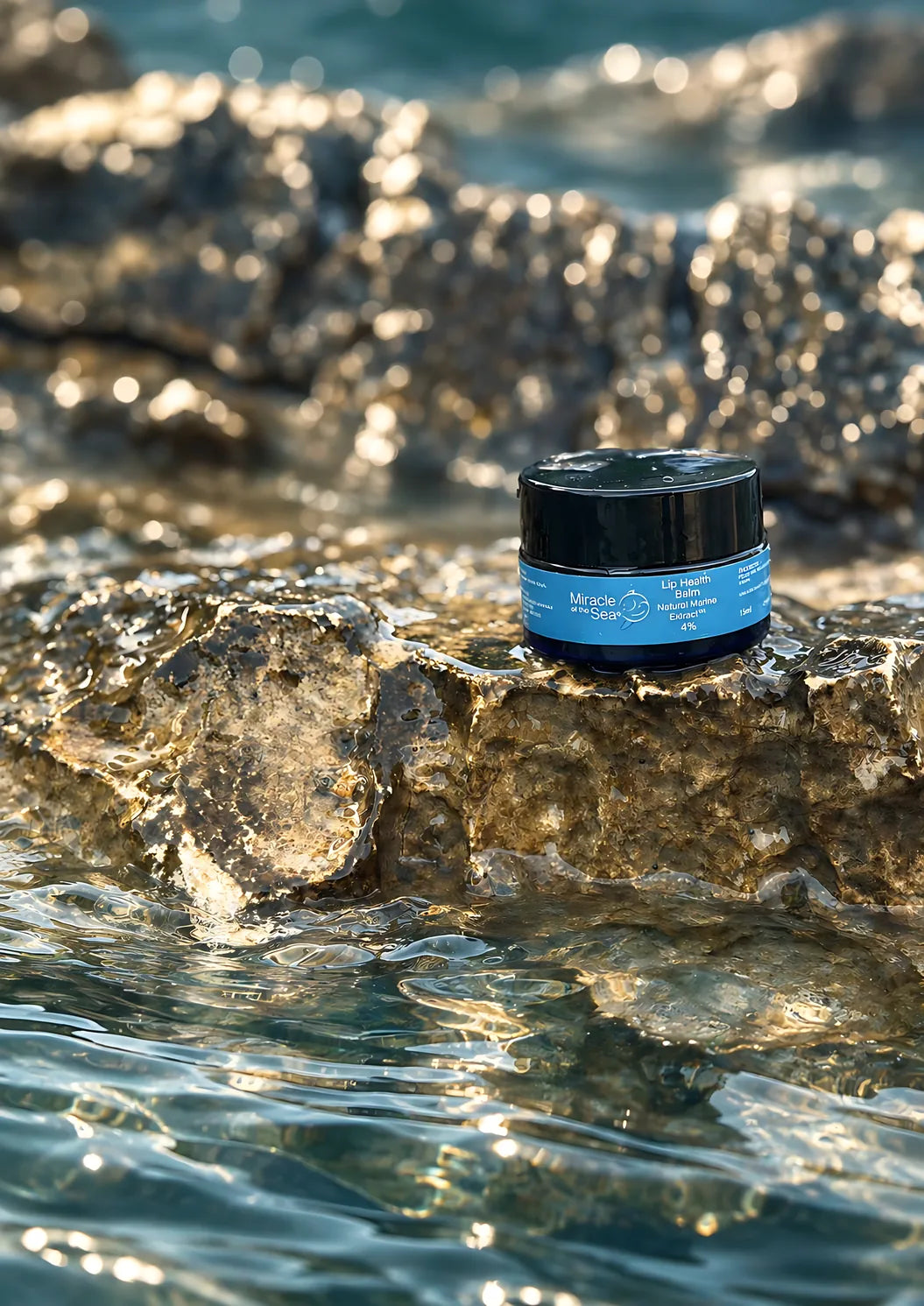
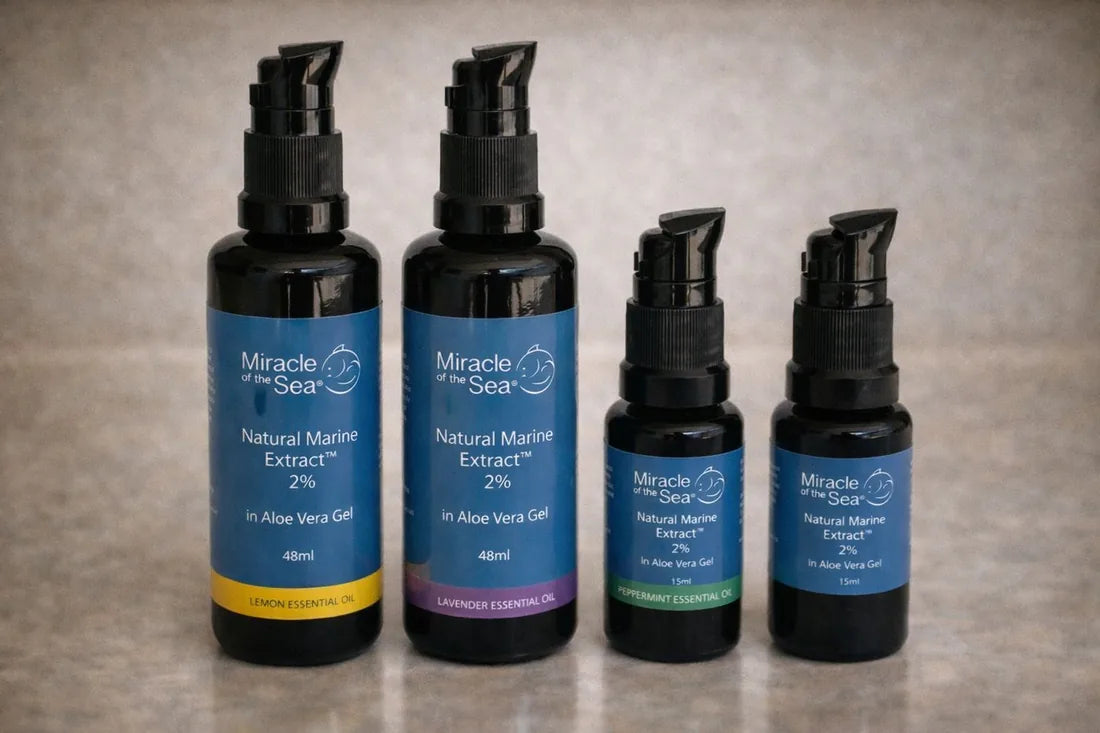
Lip Health Balm on a wet rock at the water's edge. Natural Marine Extract in aloe vera gel, in pump bottles.
Lip Health Balm · 15mLLips and face setScented with organic lavender, grapefruit and vetiver essential oils.The balm for your lips, plus 15mL of 2% Natural Marine Extract™ in aloe vera gel for your face.
30 daysMoney back on your first jar
FreeShipping over $100
PatentedUS 10,772,825
NeverTested on animals
1

Lips only, or lips and face

The set adds Dr. Lewis's 2% gel for the rest of your face.

2

Strength

Every new customer starts at 2%, the strength used in the study.

Already using Natural Marine Extract™? Change strength

Most people move up after a year or so at 2%, once they know how their skin takes it. 4% and 10% are final sale.

3One-time or subscription

Buy once, or have it delivered on a schedule for 15% less. Your choice.

Deliver every

A jar lasts four to six months on Dr. Lewis's routine. Pick a shorter interval if you use more.The face gel runs out sooner than the balm, so the set starts at every 3 months.

Subscribing is optional. If you choose it, you can cancel online at any time, in one click. It takes effect immediately and is as easy as signing up. You'll be charged $127.50$221$433.50$256.25$349.75$562.25 today, with $20 off your first set, then $127.50$221$433.50$276.25$369.75$582.25 every 346 months until you cancel. Cancel online from your account at any time, in one click. It takes effect immediately and is as easy as signing up. We'll email you these terms and how to cancel. Full subscription terms

Lip Health BalmLips and face set · 2%4%10% strength

One-time purchase. Never renews.Subscription, every 346 months. Cancel anytime online.

$150$260$510$325$435$685 $150$127.50$260$221$510$433.50$305$256.25$415$349.75$665$562.25 one-timeevery 346 monthstoday, then $127.50$221$433.50$276.25$369.75$582.25 every 346 months

You save $22.50 on every deliveryYou save $39 on every deliveryYou save $76.50 on every deliveryYou save $20 with the setYou save $68.75 today and $48.75 on every delivery afterYou save $20 with the setYou save $85.25 today and $65.25 on every delivery afterYou save $20 with the setYou save $122.75 today and $102.75 on every delivery aftercompared with buying the balm and gel separately

Apple Pay, Google Pay, Shop Pay, PayPal or card. Free shipping.

The 30-day guarantee covers a first order of the balm at 2%.4% is final sale.10% is final sale.

Still reaching for lip balm every hour?

Tap any that sound like you, and see what's behind it

  • Balm sits on top. Underneath, your lips have no oil to keep moisture in.

  • Lips lose water about three times as fast as your cheek.

  • It sticks out and tilts toward the sky, so it takes the most sun. Dry lines there open into splits.

  • Their outer layer is thin, so weather gets to them first.

  • Sun and time soften the edge of your lips, and color runs into the lines.

  • With no oil of their own, lips are usually the first part of your face to show age.

  • Most balms only coat. When they wear off, nothing has changed underneath.

Your lips make no oil of their own. That's where all of these start.

Start with 2%
Two young women with their faces pressed together, looking into the camera.
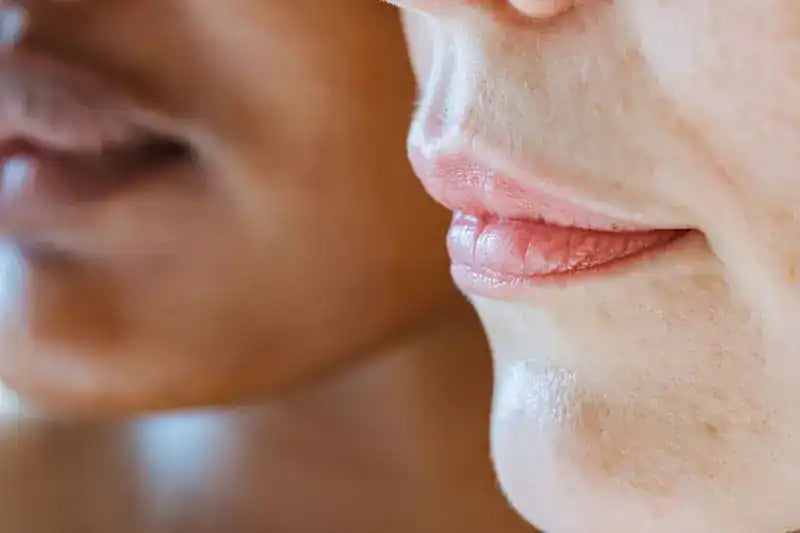
Lips in profile in sharp focus, a second face soft behind them.

Three things you've been told about lip balm.

Tap a card to flip itHover over a card to flip it

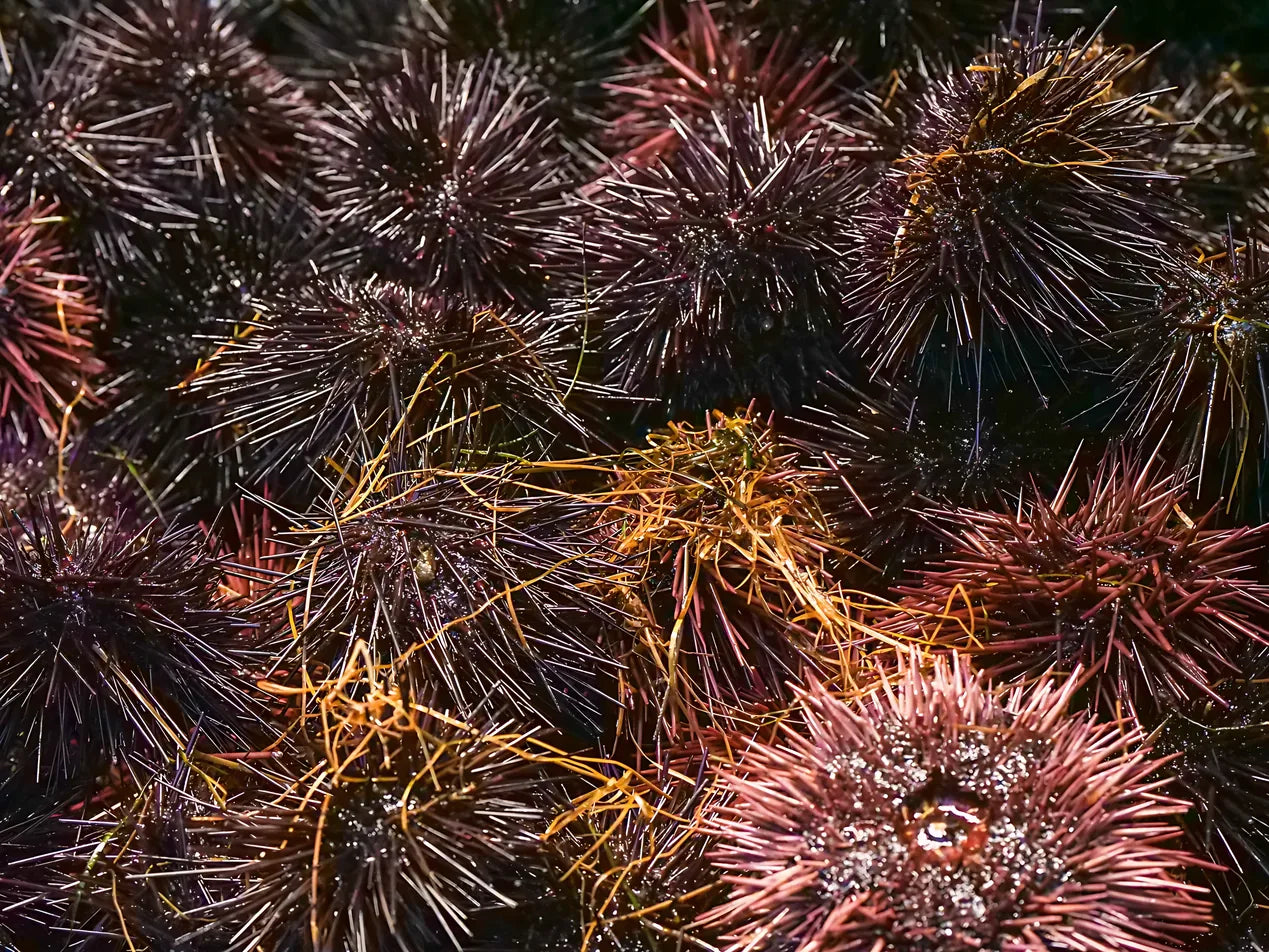
Purple and red sea urchins piled together.

The guarantee

Thirty days to see if it's for you.

How it works

Contact us within 30 days of delivery and send it back. We refund once it reaches us.

Free shipping

On orders over $100. Every jar, set and subscription refill on this page qualifies.

No lock-in

Buy once, or subscribe and cancel online anytime, in a click.

The 30-day money-back guarantee applies to your first order of the smallest size at the lowest strength. Other 2% orders are covered by our standard return policy. 4% and 10% are final sale.
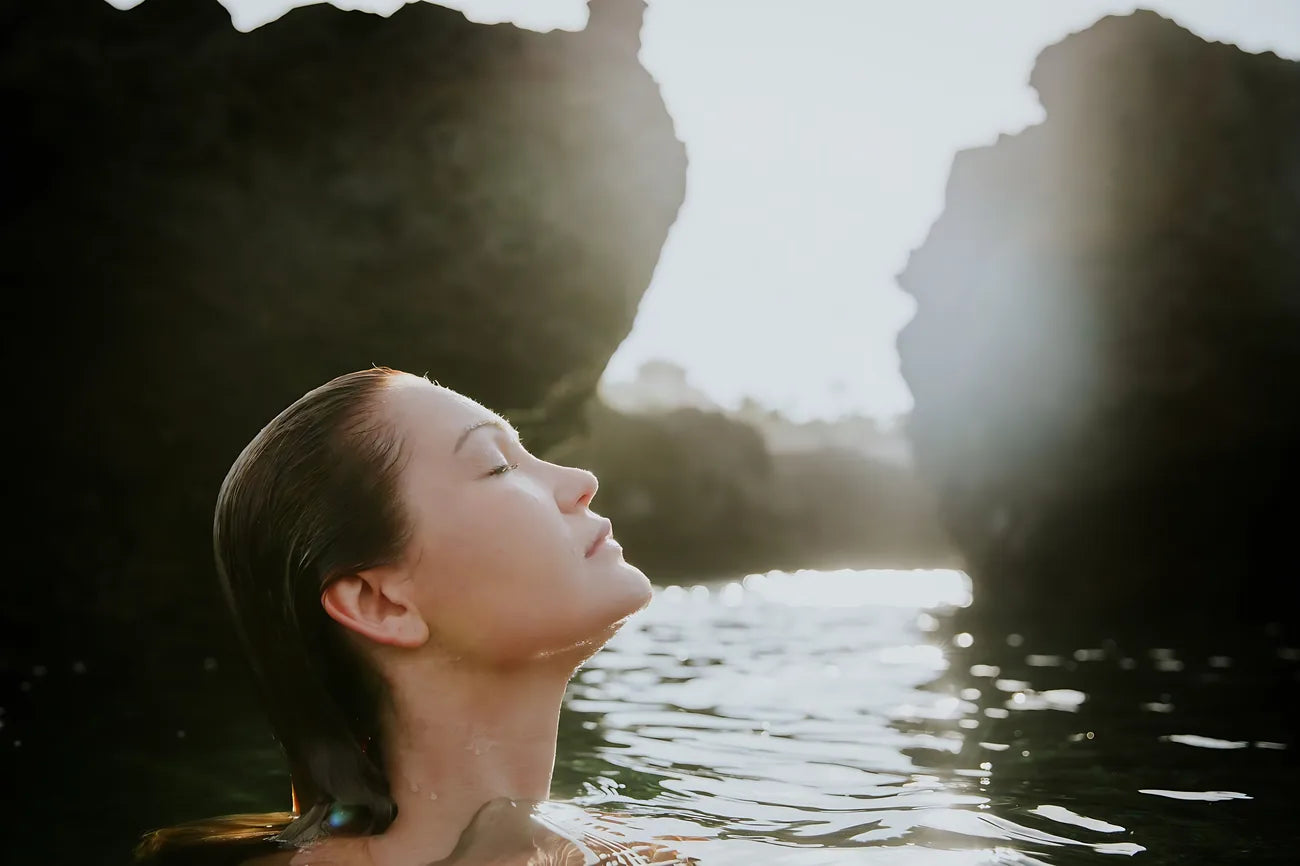
A woman with her eyes closed, floating in a sunlit sea cave.

How to use it

Ten seconds, once a day.

The routine Dr. Lewis gives his patients.

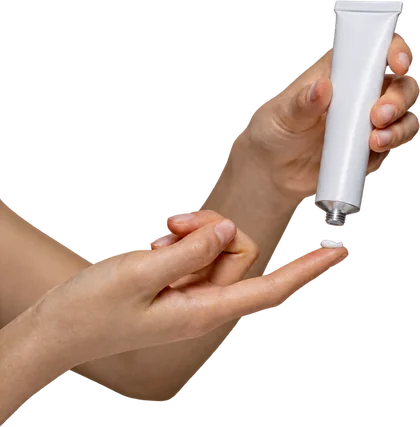
1A quarter of a pea

Enough for both lips.

That's the whole dose.
2Ten seconds of massage

Press it in firmly so it works into your lips.

10seconds

Every day for a month, then every other day.

Pick how often you reach for lip balm now. Every dot is one application over 60 days.
I reapplya day
180300480720times you'd reach for your current balm
45applications of Lip Health Balm
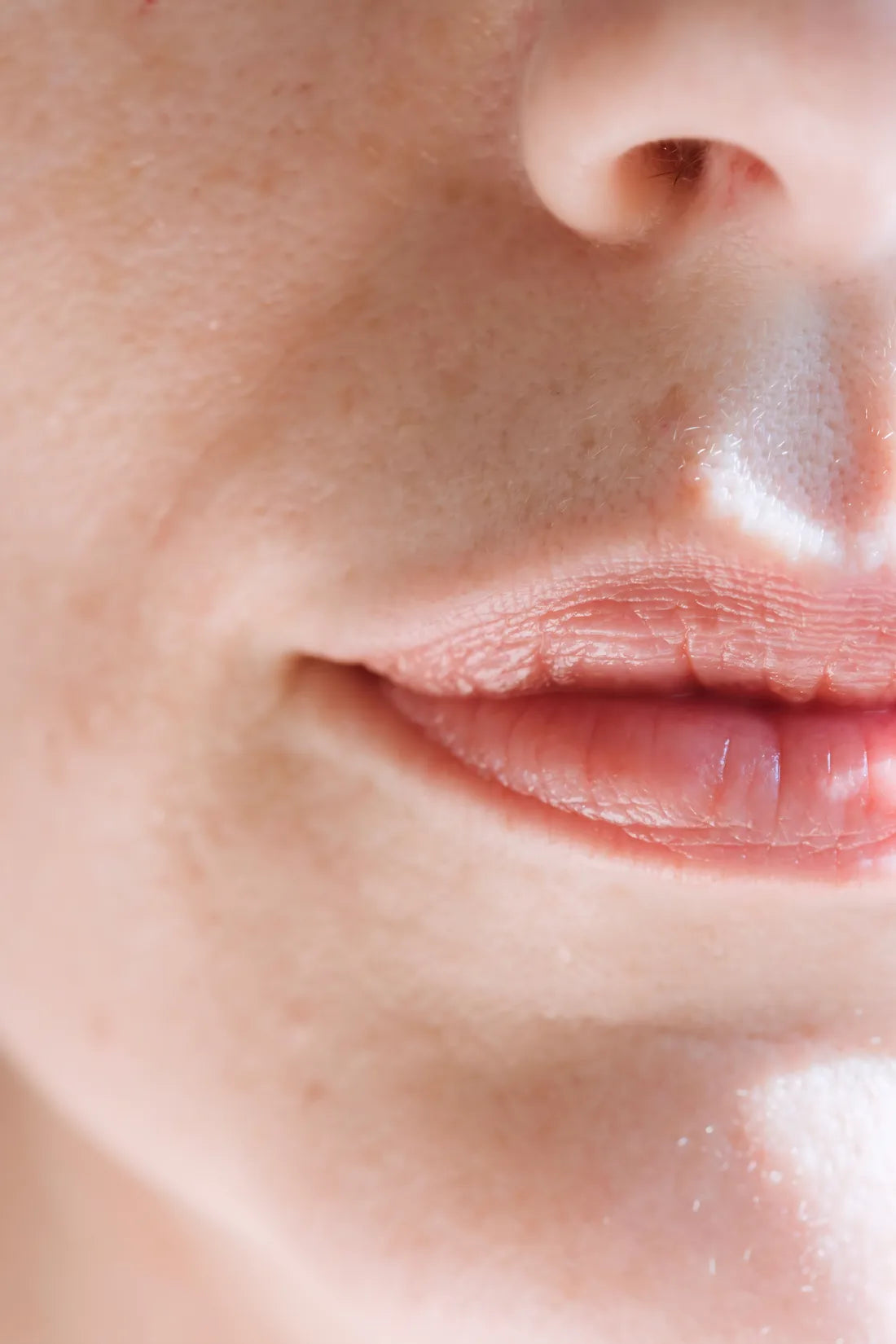
A freckled woman's lips and chin in profile, a second face softly out of focus behind her.

Questions people ask here.

Something else? Ask us

How do I use it?
Apply about a quarter of a pea and massage it in firmly for at least 10 seconds. Use it once a day for the first month, then every other day.
Why not just put the face gel on my lips?
Because your lips make no oil of their own. The gel is light and water-based, made for skin that has oil glands. Lip Health Balm puts the same extract in organic coconut oil, which seals moisture in where your lips can't. Use the gel on your face and the balm on your lips. The Lips and face set has both, for $20 less than buying them separately.
How soon will I notice a difference?
Use it every day for the first month, then every other day. Our study assessed skin monthly over four months.
Does it have SPF?
No. Your skin's own oil carries squalene, which helps protect it from sun damage, and your lips make none. Dermatologists recommend a lip product with SPF 30 or higher whenever you're outdoors. Wear yours in the sun.
When should I see a dermatologist instead?
The American Academy of Dermatology says most chapped lips improve within two to three weeks of good care. If yours don't, or a crack, sore or rough patch won't heal, see a board-certified dermatologist. Long-term sun damage on the lips can lead to precancers, and only a dermatologist can tell what a stubborn patch is.
Can I use it during radiation?
Yes. Dr. Lewis recommends it before, during and after radiation to help minimize the damage to your lips and start the repair process. Let your radiation team know you're using it.
What's in it?
Natural Marine Extract™ (the fourteen food-grade marine species named on this page), organic coconut oil, aloe vera gel, vegetable glycerin, and Ocean Breeze, our proprietary blend of 100% organic lavender, grapefruit and vetiver essential oils. Hydrogenated polyisobutene, ethylene copolymer and butylene copolymer help it stay on your lips. The proportions are proprietary.
Why does it cost more than other lip balms?
The active is a patented extract of fourteen marine species, all grown in-house at MBET's facilities on the Baja coast, and made in small batches in Los Angeles. You also use far less: a quarter of a pea once a day, then every other day, so one 15mL jar lasts four to six months.
Which strength should I start with?
2%. Higher strengths are for people who already use Natural Marine Extract™.
Is it safe with a seafood allergy?
No allergic reactions were recorded in our four-month study, including among 14 participants with known seafood allergies. Even so, we don't recommend Lip Health Balm for anyone with a known seafood allergy.
Is it tested on animals?
No. MBET never tests its products on animals.
Is it vegan?
No. Natural Marine Extract™ comes from marine species that include abalone, sea cucumbers, sea urchins and a scallop, so Lip Health Balm isn't vegan. It is never tested on animals.
Do I have to subscribe?
No. A one-time purchase is the default, and it never renews. Subscribing is an option you can choose if you'd like the balm to arrive on a schedule for 15% less.
How does the subscription work?
If you choose it, you pay the subscription price today and the same price every 3, 4 or 6 months, whichever you pick, until you cancel. The Lips and face set takes $20 off your first order, so your first set costs $20 less than the ones after it. We'll email you a confirmation with these terms and how to cancel. Full subscription terms
How do I cancel?
Online, from your account, at any time. It takes one click, it takes effect immediately, and it's as easy as signing up. You don't need to call or email anyone.
What if it's not for me?
Your first order of the smallest size at the lowest strength is covered by our 30-day money-back guarantee. Contact us within 30 days of delivery and send it back. We refund once it reaches us. The 4% and 10% strengths are final sale.
Is shipping free?
Yes, on orders over $100. Every jar and set on this page is over $100, subscription refills included, so yours ships free with no code.
A woman with red hair, shoulder-deep in the sea at sunset, her face tilted up to the light.

Once a day. Not all day.

A quarter of a pea and ten seconds. If your first jar isn't for you, send it back within 30 days.

Shop Lip Health Balm

  • Patented extractNo. 10,772,825
  • Money backon your first jar
  • Free shippingover $100

Miracle of the Sea is a cosmetic product and does not claim to treat, cure or prevent any disease. All results are individual. Statements have not been evaluated by the FDA.

References
  1. Kobayashi H, Tagami H. Functional properties of the surface of the vermilion border of the lips are distinct from those of the facial skin. Br J Dermatol 150(3):563–567, 2004.
  2. Ludovici M, et al. Influence of the sebaceous gland density on the stratum corneum lipidome. Sci Rep, 2018.
  3. Drake RL, et al. Gray's Anatomy for Students. Vermilion border of the lip.
  4. American Academy of Dermatology. Dermatologists' tips for healing dry, chapped lips.
  5. Agero AL, Verallo-Rowell VM. A randomized double-blind controlled trial comparing extra virgin coconut oil with mineral oil as a moisturizer for mild to moderate xerosis. Dermatitis 15(3):109–116, 2004.
  6. Varma SR, et al. In vitro anti-inflammatory and skin protective properties of virgin coconut oil. J Tradit Complement Med 9(1):5–14, 2019.
  7. Dal'Belo SE, Gaspar LR, Maia Campos PMBG. Moisturizing effect of cosmetic formulations containing Aloe vera extract in different concentrations assessed by skin bioengineering techniques. Skin Res Technol 12:241–246, 2006.
  8. Fluhr JW, Darlenski R, Surber C. Glycerol and the skin: holistic approach to its origin and functions. Br J Dermatol 159(1):23–34, 2008.
  9. Thaweekitphathanaphakdee S, et al. Abalone collagen extracts potentiate stem cell properties of human epidermal keratinocytes. Marine Drugs, 2019.
  10. Hashemi G, et al. Anti-wrinkle and antioxidant activity of collagen from Holothuria leucospilota. Jundishapur J Nat Pharm Prod, 2025 (applied to skin, animal study).
  11. Brasseur L, et al. The roles of spinochromes in four shallow water tropical sea urchins. Marine Drugs 15(6):179, 2017.
  12. Liu XJ, et al. Polypeptide from Chlamys farreri and UVB-induced damage in HaCaT cells. J Photochem Photobiol B 96(2):109–116, 2009.
  13. Jang YA, Kim BA. Protective effect of spirulina-derived C-phycocyanin against UVB-induced damage in HaCaT cells. Medicina 57(3):273, 2021.
  14. Senni K, et al. Fucoidan, a sulfated polysaccharide from brown algae, is a potent modulator of connective tissue proteolysis. Arch Biochem Biophys 445(1):56–64, 2006.
  15. Picardo M, Ottaviani M, Camera E, Mastrofrancesco A. Sebaceous gland lipids. Dermato-Endocrinology 1(2):68–71, 2009.
  16. Huang ZR, Lin YK, Fang JY. Biological and pharmacological activities of squalene and related compounds: potential uses in cosmetic dermatology. Molecules 14(1):540–554, 2009.
  17. Rowe DE, Carroll RJ, Day CL Jr. Prognostic factors for local recurrence, metastasis, and survival rates in squamous cell carcinoma of the skin, ear, and lip. J Am Acad Dermatol 26(6):976–990, 1992.
  18. Hirahashi T, et al. Activation of the human innate immune system by Spirulina: augmentation of interferon production and NK cytotoxicity by oral administration of hot water extract of Spirulina platensis. Int Immunopharmacol 2:423–434, 2002.
  19. Zhang W, Oda T, Yu Q, Jin JO. Fucoidan from Macrocystis pyrifera has powerful immune-modulatory effects compared to three other fucoidans. Mar Drugs 13(3):1084–1104, 2015.
  20. Assawasuparerk K, Rawangchue T, Phonarknguen R. Scabraside D derived from sea cucumber induces apoptosis and inhibits metastasis via iNOS and STAT-3 expression in human cholangiocarcinoma xenografts. Asian Pac J Cancer Prev 17(4):2151–2157, 2016.

Biopsy figures: one patient, age 60, after 46 applications, with a same size punch biopsy from each hand. Study figures: four-month study of Natural Marine Extract™ applied to skin, 283 dermatology patients.

Before you buy

Which strength is right for me?

2%. Every new customer starts there, and it's the strength used in the study. Most people move up after a year or so.

When will I notice a difference?

Use it every day for the first month, then every other day. Our study checked skin every month for four months.

Balm or gel?

The balm is for lips. Your lips make no oil, so it puts the extract in organic coconut oil to seal moisture in. The gel is for the rest of your face. The set has both, for $20 less than buying them separately.

How does subscribing work?

It's optional. One-time is chosen for you and never renews. Subscribe and it ships every 3, 4 or 6 months for 15% less, and the set takes another $20 off your first order. Cancel online anytime, in one click.

Why does it cost more than a drugstore balm?

One 15 mL jar lasts four to six months on Dr. Lewis's routine, about a dollar a day.

What if it's not for me?

Send your first jar back within 30 days of delivery and we'll refund you once it reaches us. The guarantee covers a first order of the balm at 2%.

Lip Health BalmLips and face set · 2%4%10% strength · one-timesubscription

Apple Pay, Google Pay, Shop Pay, PayPal or card

All questions